Monday, August 10, 2015

Sunset over the Luangwa River


Busy at the bar tonight!


When a herd of buffalo want to drink nothing is going to get in their way. This herd was spotted going down to the river near Tena Tena just as evening was falling.

Sausage Tree in fruit

Sausage tree fruit. They look like some sort of old BBC visual gag, like the spaghetti tree joke many years ago. But these are real trees and real fruit.

Nicknamed by some "the suicide tree" because the fruit are both heavy and hard with a habit of dropping on unfortunate people standing underneath.

Tena Tena - a wonderful luxury African experience

 Tena tena really does bring luxury into the bush, but in a way which keeps the natural surroundings and that feeling of immersion in nature.

Believe it or not this is our "tent".
 And from the outside
 Our "sitootery" (remember just hours earlier a Leopard had run within metres of this spot.
 Our view from the front of the tent across to the river where the Leopard was drinking earlier.


 The wonderful bar area and dining space.


Crossing the river

Here we are in the middle of no-where waiting for the boat to make its way across and take us to the Tena Tena side of the river.

It always amazes us that arrangements like this always seem to work faultlessly in the African bush - yet back here in the UK you can't even rely on a train being on time!
Up front was an armed scout - necessary because the river was absolutely packed with hippo.

As it was all went smoothly.

Leopard reflection

On a trip where Leopard were most certainly the stars of the show this one was very, very special.

As we drove early one morning from Kaingo bush camp to the river crossing point that would take us to the other side of the Luangwa river to Tena Tena, we stopped for coffee.

About 250m downstream we saw this Leopard on a sand bank in the river drinking. Immediately after this shot it leapt perhaps 5m to shore and trotted off up the sand to the bush beyond.


Little did we know that this action had, in fact, taken place on the sand bar immediately to the front of our tent at Tena Tena camp, which nestles under the trees along the edge of the main river channel.

This leopard was a mere 200m from what was to become our front door for the next four nights.

Sunset at Kaingo


Shadows on an Elephant canvas


Open wide!


Mum and baby

This mother and baby hippo was one of the sightings we had off the deck at Kaingo camp.

Kaingo Camp

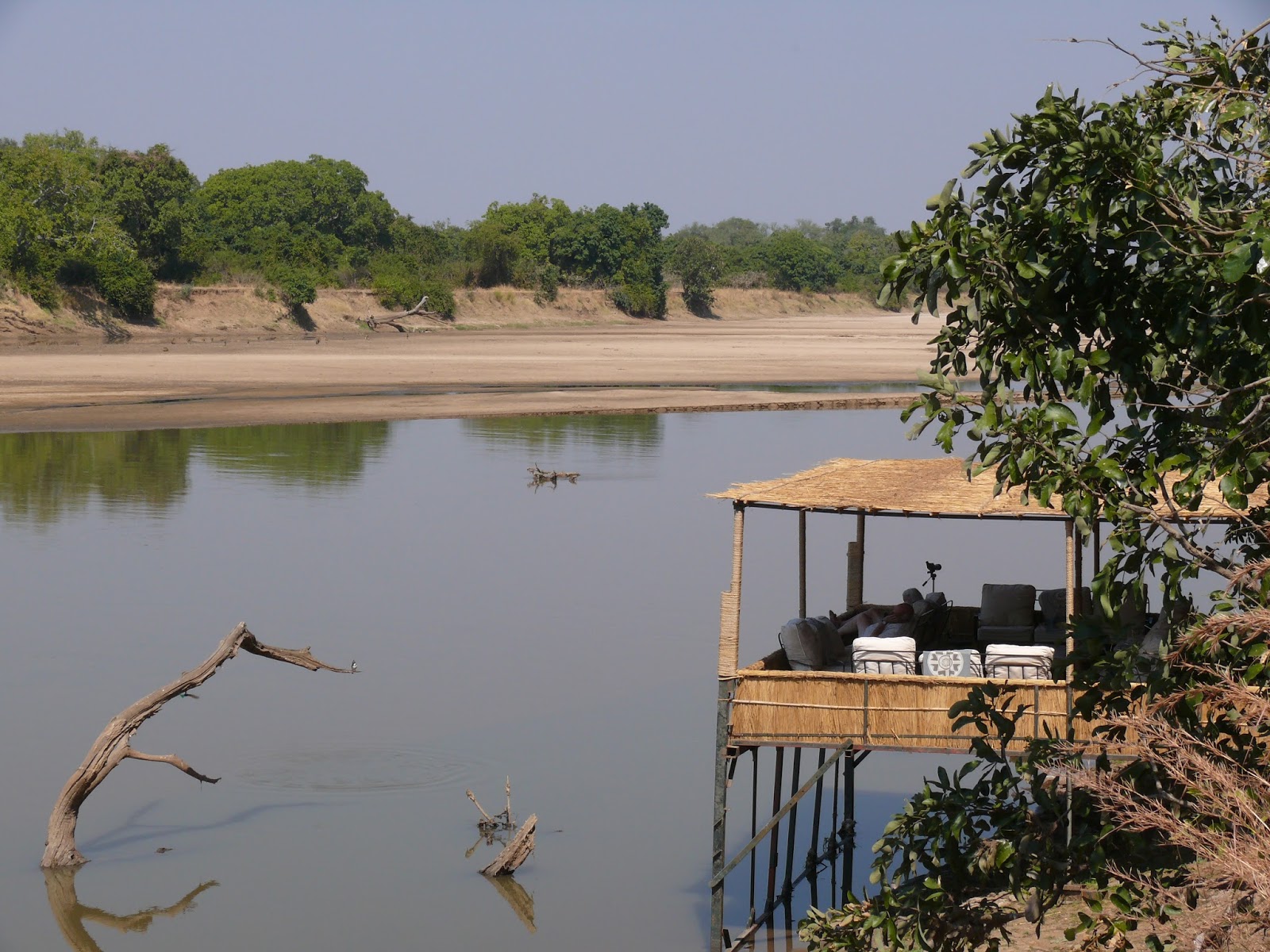
The deck area at Kaingo Camp - a wonderful place to have afternoon tea before setting out on a game drive. In all honesty you could safari from here - we watched all manner of birds and mammals from the deck happily going about their business on the Luangwa river.

Pied Kingfisher


White fronted Bee eater

 Some of my personal favourites white Fronted Bee Eaters are quite common - but devilishly hard to photograph. They are quite small and always busy feeding. Your one chance is to spot the perh they are using to hunt from (they catch bees on the wing) and hope to get one still long enough for a photo.

White-fronted Bee Eater society is perhaps the most complex of any bird species known; these colonial nesters are monogamous, pairing for life; may switch frequently between breeding parent and helper roles when rearing young.

Someone has a drink problem


Elephant lunch

This Ele really enjoyed his lunch of acacia pods just metres away from our vehicle.

African shadow


The bimble with the tumble

 One of the fantastic things about the two bush camps run by shenton Safaris , mwamba and Kaingo is that it's possible to opt to walk between them rather than be driven from one to another.

The walk is about 7km and takes three hours or so. On the way you encounter whatever the African bush throws your way.

Here we are setting off from Mwamba camp, just the two of us, our guide Patrick and armed scout Edgar.

 First we got a lesson in termites and how some use mud to shade themselves when working on a tree.
 Then the mood changed. Edgar (AKA "The President"), our scout, spotted a pride of Lion about 100m away. The matriarch was lying out to the front and could clearly see us. In lion terms 100m is about 6 seconds of running.

You can just about make out some of them just over Edgar's left shoulder.
 This was just the point, as we quietly watched them watching us, that Jane fell over. The ground was pretty rough and a misplaced footfall sent her tumbling down. We held our breaths - would this provoke the lion?

Not at all - Lion like their sleep and this pride wasn't for charging around - even for a tasty white woman writhing on the ground.
As we walked on from our fantastic Lion spot I noticed how the group was walking so much closer together.

African Civet

In 21 years of safari trips, I've never been able to get a decent picture of a Civet. They are nocturnal and quite shy, but this one was a gem - stood well for a picture.

The African civet is a mammal that is closely related to weasels and mongooses. This animal is widely distributed in Sub-Saharan Africa inhabiting all areas that provide enough water, food and shelter.

The African civet is threatened by habitat loss and deforestation. People hunt African civet because of its musk that is popular ingredient of many perfumes. Despite these factors, population of African civets in the wild is large and stable.


Ele sunset


Ele bath time